EPR and Verified Recycled Content: What Manufacturers Need to Know
How third-party certification supports compliance and builds competitive advantage
Extended Producer Responsibility (EPR) is no longer on the horizon; it's here. Seven U.S. states have enacted packaging EPR laws as of early 2026, with one in five Americans now living in an EPR jurisdiction. Oregon began active enforcement in July 2025, and over 1,700 producers have already submitted compliance reports. For manufacturers of consumer goods, electronics, textiles, and packaging, the question isn't whether EPR will affect your business, but how prepared you are to respond.
At GreenCircle Certified, we've seen firsthand how verified recycled content can serve as both a transparency tool for EPR reporting and a market differentiator. As EPR programs mature across California, Colorado, Maine, Maryland, Minnesota, Oregon, and Washington, with more states developing frameworks, the intersection of producer responsibility and recycled content verification is becoming increasingly strategic.
These regulatory shifts are redefining how packaging decisions are made — financially, operationally, and reputationally. We’ll be unpacking this evolving landscape in more depth during our upcoming webinar, Navigating a New Era of Packaging Regulation: From Compliance to Competitive Advantage, featuring experts in EPR strategy, certification, and sustainability communications. If EPR is impacting your portfolio, this discussion will help connect compliance requirements to practical, cross-functional action. [Register Here]
What EPR Means for Your Business
EPR shifts the financial and operational responsibility for managing packaging waste from municipalities to the producers who design and profit from those products. Under EPR, companies must register with state programs, pay fees based on material type and recyclability, and fund recycling infrastructure and consumer education.
The fees aren't trivial. In Oregon, noncompliance penalties reach up to $25,000 per day. In Canada, where EPR has operated for over two decades, regulators routinely require companies to back-pay for years of missed fees. Beyond financial penalties, noncompliance can result in loss of market access as retailers increasingly demand proof of EPR compliance from suppliers.
Most EPR frameworks target four core material categories: plastics, glass, paper and cardboard, and metals. Understanding exactly what materials comprise your packaging is essential, not just for compliance reporting, but for identifying opportunities to reduce fees and improve recyclability.
The Market Momentum Behind EPR
EPR isn't emerging in isolation. Several powerful market forces are converging to make recycled content and sustainable packaging business imperatives:
Consumer demand is intensifying. A 2025 McKinsey survey found that 77% of U.S. consumers consider recyclable packaging extremely or very important, and 62% prioritize packaging made with recycled content. Nearly three-quarters (73%) of consumers report they're open to switching brands based on sustainable packaging. Among Gen Z and Millennials, roughly half are willing to pay a premium for eco-friendly packaging.
Recycled content markets are growing rapidly. The global recycled plastics market reached $72.66 billion in 2025 and is projected to exceed $103 billion by 2030. This growth is driven by regulatory mandates, corporate sustainability commitments, and expanding infrastructure for both mechanical and chemical recycling.
Regulations are multiplying. Beyond EPR, many jurisdictions mandate minimum recycled content. The European Union (EU) requires 25% recycled content in PET beverage bottles by 2025 and 30% by 2030. California mandates 25% recycled content in plastic packaging by 2032. A 2024 UC Berkeley study found that requiring 40% recycled content in new plastic products is among the most impactful policies for reducing plastic pollution.
Where Third-Party Verification Helps
Accurate data is the foundation of EPR compliance. Companies need detailed information on material composition, sales volumes by jurisdiction, and recyclability. Many businesses don't yet have this visibility, and building these data systems is essential.
This is where third-party verification becomes valuable. EPR reporting relies on accurate material data, and some programs are beginning to incorporate fee modulation based on recyclability and recycled content. Verified claims provide the transparency needed to demonstrate compliance and potentially qualify for reduced fees in jurisdictions that reward sustainable material choices.
Recycled content certification serves three key functions in the EPR landscape:
Compliance documentation. Third-party certification provides auditable evidence of recycled content levels, reducing the risk of reporting errors and potential penalties. For manufacturers navigating multiple state programs with varying requirements, verified data simplifies compliance.
Potential fee reductions. Some EPR jurisdictions implement eco-modulated fees, where producers using more recyclable or recycled materials may qualify for reduced program costs. While specific fee structures vary by state and province, verified recycled content may support fee reduction applications where eco-modulation applies.
Market differentiation. Retailers and consumers demand transparency. Products certified by recognized third parties may qualify for programs like Amazon's Climate Pledge Friendly, which requires at least 50% recycled content. In a market where consumers prioritize clear labeling of recycled content, certification provides competitive advantage.
What to Do Now
Start by mapping your material data. Gather detailed information on product and packaging materials, volumes, and distribution by state or province. Understanding what materials you use and where you sell them is the foundation for accurate EPR reporting.
Next, assess your packaging design for EPR risk. Identify where your packaging may trigger higher fees or compliance challenges, and look for opportunities to redesign for recyclability, reduce material use, or incorporate recycled content. Design decisions made today will affect EPR costs for years to come.
If you're using recycled materials, consider third-party verification. GreenCircle's Recycled Content certification, recognized by ANSI National Accreditation Board (ANAB) evaluates the source of recycled content raw materials to determine their pre-consumer and post-consumer designations. This verification supports EPR reporting, strengthens sustainability claims, and may open doors to retail programs that prioritize verified environmental attributes.
Finally, stay informed. EPR programs are evolving rapidly, with new registration deadlines, reporting requirements, and fee structures being finalized across multiple jurisdictions. Companies that stay ahead of these changes can avoid back fees, minimize penalties, and reduce long-term costs.
On Demand Webinar: Navigating a New Era of Packaging Regulation
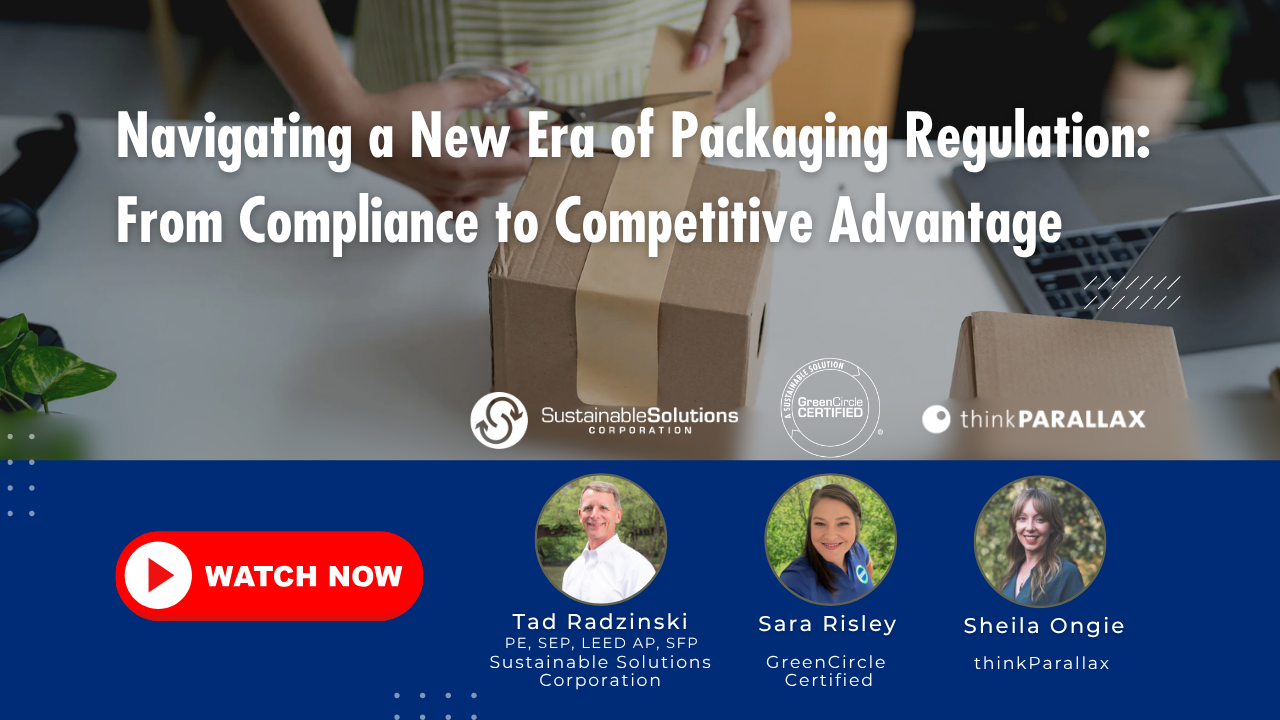
Packaging regulation is expanding quickly and the implications reach far beyond environmental reporting. EPR, truth-in-recycling laws, fee modulation, and increased scrutiny of environmental claims are reshaping packaging decisions across finance, operations, product development, and marketing.
Watch the webinar, Navigating a New Era of Packaging Regulation: From Compliance to Competitive Advantage. Industry leaders from Sustainable Solutions Corporation, GreenCircle Certified, and thinkPARALLAX will break down what producers need to know now.
You’ll learn how to:
Understand the direction of U.S. packaging EPR programs and what they mean for producers nationwide
Identify where regulatory risk, cost exposure, and packaging decisions intersect across product portfolios
Use Life Cycle Assessments (LCAs) to inform smarter packaging choices and support fee reduction strategies
Evaluate the role of third-party certification in validating improvements and strengthening defensible claims
Translate sustainability progress into compliant messaging that supports sales and market credibility
This is an insightful discussion, bringing together expertise across regulation, life cycle analysis, product innovation, certification, and sustainability communications. Find out how an integrated approach to EPR readiness helps brands reduce risk, control costs, and move forward with confidence. Webinar was recorded live March 2026.
The Path Forward
EPR represents both a compliance challenge and a strategic opportunity. The companies that will thrive are those that view producer responsibility not simply as a regulatory burden, but as a catalyst for innovation and market leadership.
Verified recycled content offers a practical pathway forward. It supports accurate EPR reporting, may reduce program fees where eco-modulation applies, and differentiates brands in a market where transparency and sustainability drive purchasing decisions.
As EPR programs continue to expand, the value of third-party verification will only grow. Companies that build robust data systems, embrace design for circularity, and validate their sustainability claims through independent certification will be best positioned to navigate the complexities ahead.

Be Part of Our Inner Circle
Be the first to get new content, expert tips, and industry updates in your inbox.
We respect your privacy and will never share your information. Unsubscribe anytime.


